Surah Az-Zumar Ayah 32 (39:32) — Meaning & Tafsir | Quran.GG

Surah Az-Zumar, Ayah 32

39:32 · Meaning and tafsir

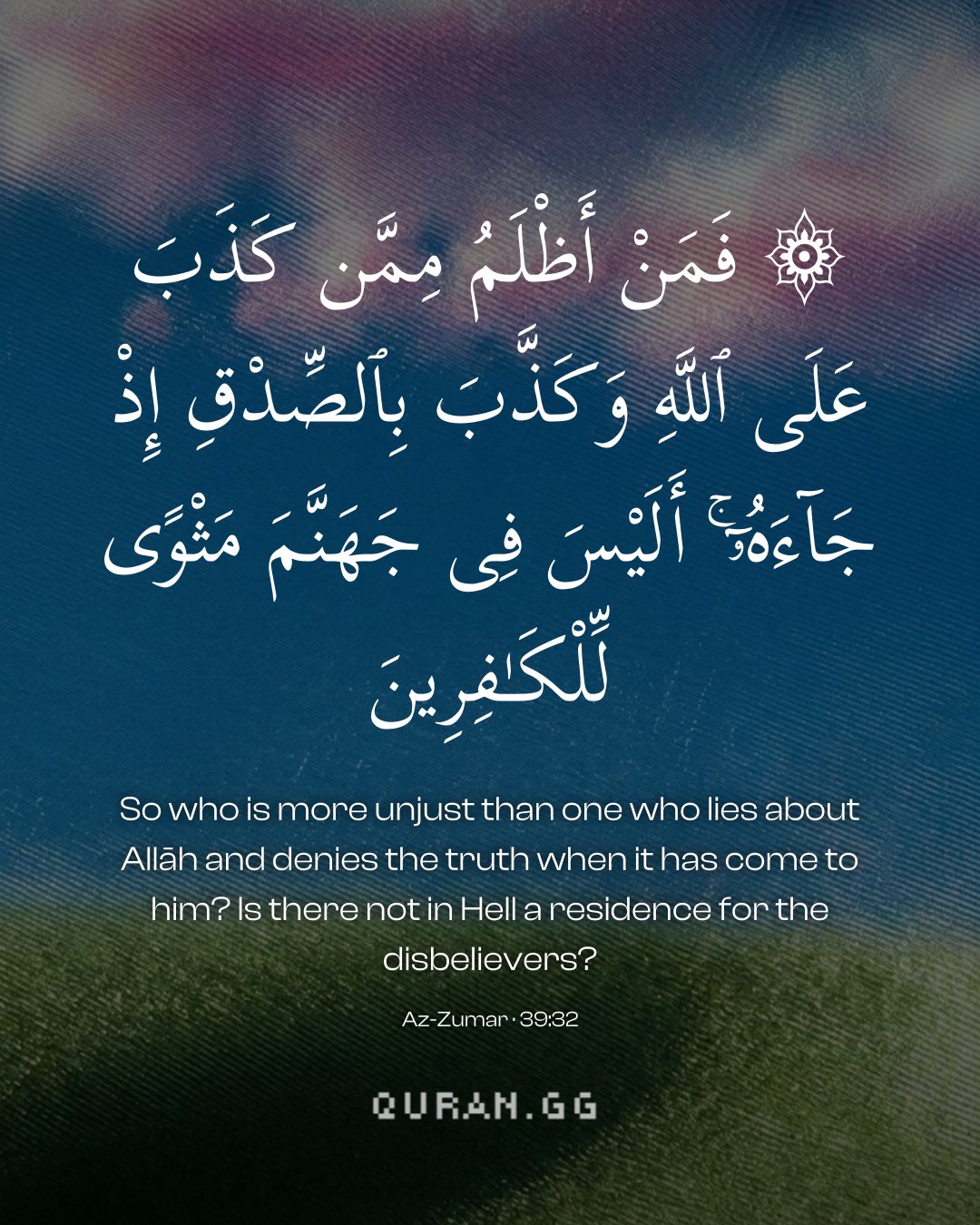
۞ فَمَنْ أَظْلَمُ مِمَّن كَذَبَ عَلَى ٱللَّهِ وَكَذَّبَ بِٱلصِّدْقِ إِذْ جَآءَهُۥٓ ۚ أَلَيْسَ فِى جَهَنَّمَ مَثْوًى لِّلْكَـٰفِرِينَ ٣٢

So who is more unjust than one who lies about Allāh and denies the truth when it has come to him? Is there not in Hell a residence for the disbelievers?

Surah Az-Zumar 39:32 in Arabic with its translation: “So who is more unjust than one who lies about Allāh and denies the truth when it has come to him? Is there…”

Make something with this ayah

Turn it into a video for Stories, Reels or TikTok, recited by the reciter you pick, or an image on a background you choose. Free, in your browser.

Download this image

Tafsir Ibn Kathir (abridged)

The Punishment of the Disbelievers and Liars, and the Reward of the Sincere Believers

The idolators uttered lies against Allah and said that there were other gods besides Him and claimed that the angels were the daughters of Allah and that Allah had a son -- glorified be He far above all that they say. Moreover, they rejected the truth when it came to them on the lips of the Messengers (peace and blessings be upon them all). Allah says:

فَمَنْ أَظْلَمُ مِمَّن كَذَبَ علَى اللَّهِ وَكَذَّبَ بِالصِّدْقِ إِذْ جَآءَهُ

(Then, who does more wrong than one who utters a lie against Allah, and denies the truth when it comes to him!) meaning, there is no one who does more wrong than such a person, because he combines the two aspects of falsehood, disbelief in Allah and disbelief in the Messenger of Allah ﷺ. They made false claims and rejected the truth, Allah threatened them:

أَلَيْسَ فِى جَهَنَّمَ مَثْوًى لِّلْكَـفِرِينَ

(Is there not in Hell an abode for the disbelievers) who are the deniers and rejecters. Then Allah says:

وَالَّذِى جَآءَ بِالصِّدْقِ وَصَدَّقَ بِهِ

(And he who has brought the truth and (those who) believed therein,) Mujahid, Qatadah, Ar-Rabi` bin Anas and Ibn Zayd said, "The one who brought the truth was the Messenger ." `Abdur-Rahman bin Zayd bin Aslam said:

وَالَّذِى جَآءَ بِالصِّدْقِ

("And he who has brought the truth) means the Messenger of Allah ﷺ.

وَصَدَّقَ بِهِ

(and (those who) believed therein) means the Muslims."

أُوْلَـئِكَ هُمُ الْمُتَّقُونَ

(they are those who have Taqwa). Ibn `Abbas, may Allah be pleased with him, said, "They fear and shun Shirk."

لَهُم مَّا يَشَآءُونَ عِندَ رَبِّهِمْ

(They shall have all that they will desire with their Lord.) means, in Paradise; whatever they ask for they will have.

لَهُم مَّا يَشَآءُونَ عِندَ رَبِّهِمْ ذَلِكَ جَزَآءُ الْمُحْسِنِينَ - لِيُكَـفِّرَ اللَّهُ عَنْهُمْ أَسْوَأَ الَّذِى عَمِلُواْ وَيَجْزِيَهُمْ أَجْرَهُمْ بِأَحْسَنِ الَّذِى كَـانُواْ يَعْمَلُونَ

(That is the reward of doers of good. So that Allah may expiate from them the evil of what they did and give them the reward, according to the best of what they used to do.) This is like the Ayah:

أُوْلَـئِكَ الَّذِينَ نَتَقَبَّلُ عَنْهُمْ أَحْسَنَ مَا عَمِلُواْ وَنَتَجَاوَزُ عَن سَيْئَـتِهِمْ فِى أَصْحَـبِ الْجَنَّةِ وَعْدَ الصِّدْقِ الَّذِى كَانُواْ يُوعَدُونَ

(They are those from whom We shall accept the best of their deeds and overlook their evil deeds. (They shall be) among the dwellers of Paradise, a promise of truth, which they have been promised.) (46:16).

أَلَيْسَ اللَّهُ بِكَافٍ عَبْدَهُ وَيُخَوِّفُونَكَ بِالَّذِينَ مِن دُونِهِ وَمَن يُضْـلِلِ اللَّهُ فَمَا لَهُ مِنْ هَـادٍ - وَمَن يَهْدِ اللَّهُ فَمَا لَهُ مِن مُّضِلٍّ أَلَيْسَ اللَّهُ بِعَزِيزٍ ذِى انتِقَامٍ - وَلَئِن سَأَلْتَهُمْ مَّنْ خَلَقَ السَّمَـوَتِ وَالاٌّرْضَ لَيَقُولُنَّ اللَّهُ قُلْ أَفَرَأَيْتُم مَّا تَدْعُونَ مِن دُونِ اللَّهِ إِنْ أَرَادَنِىَ اللَّهُ بِضُرٍّ هَلْ هُنَّ كَـشِفَـتُ ضُرِّهِ أَوْ أَرَادَنِى بِرَحْمَةٍ هَلْ هُنَّ مُمْسِكَـتُ رَحْمَتِهِ قُلْ حَسْبِىَ اللَّهُ عَلَيْهِ يَتَوَكَّـلُ الْمُتَوَكِّلُونَ

Ma'arif al-Qur'an

All deeds will be given against oppressions and infringement of rights, but one's 'iman (faith) will not be given

After having reported all Hadith narrations cited above, it has been said in Tafsir Mazhari that the thing mentioned about giving the deeds of the oppressor in settlement of the rights of the oppressed means deeds other than 'iman (faith). The reason is that all oppressions and injustices are acts of sin. They are not kufr or disbelief. And the punishment of sinful deeds will be limited as against 'iman (faith) which is a limitless deed. Its reward too is limitless, that is, living in Jannah forever - even though, it may happen after having gone through the punishment of sins and staying in Jahannam for a certain period of time. The outcome is, when the good deeds of the oppressor - with the exception of 'iman (faith) - will finish once given to the oppressed to the last deed leaving nothing behind but 'iman, then, this 'iman will not be taken away from him forcibly. Instead, the rights of the oppressed will be paid back by putting the sins of the oppressed in the account of the oppressor. As a result, this person will, after he has undergone the punishment of his sins, will finally enter the Jannah, and then this state of his will be everlasting. The author of Tafsir Mazhari says that Imam al-Baihaqi has also said so.

In verse 32, it was said: كَذَّبَ بِالصِّدْقِ (rejects the truth) while in verse 33, it was said: الَّذِي جَاءَ بِالصِّدْقِ (As for the one who has come with the truth): At both these places, the word الصِّدْقِ : (as-sidq: the truth) means teachings brought by the Holy Prophet ﷺ ، whether it be the Qur'an, or be other teachings of ahadith in addition to the Qur'an. And the expression: صَدَّقَ بِهِ (saddaga bihi: and believed it to be true - 39:33) includes all believers who have testified to it.

Tazkirul Quran

The Quran’s statements are in a language intelligible to man and within the sphere of his knowledge, so that nobody should have any difficulty in understanding them. Here, in symbolic language, it has been explained that the principle of the Unity of God as compared to polytheism is more rational and consistent with nature. Indeed, the functioning of the external universe is indicative of the fact that a single Will is operative in it. Had there been many intentions operative therein, the system of the universe could not have run so harmoniously. Moreover, man’s nature is also such that it prefers unity in loyalty. It is entirely against man’s nature to subscribe to different kinds of loyalties, as a result of which he is unable to do justice to any of them. All arguments and possibilities indicate that there is only one God, who is the Creator of man and who is worthy of being worshipped by him. In the present world, this fact is proclaimed through men like us. On the Day of Judgement, this will be declared by the Creator of the Universe Himself. At that time, denial of this fact will be impossible.

Uthmani text of the Madinah mushaf (King Fahd Complex). Translation: Saheeh International. Tafsir via Quran.com.