Tafsir Ibn Kathir (abridged)
Man is fickle when Ease comes to Him after Difficulty
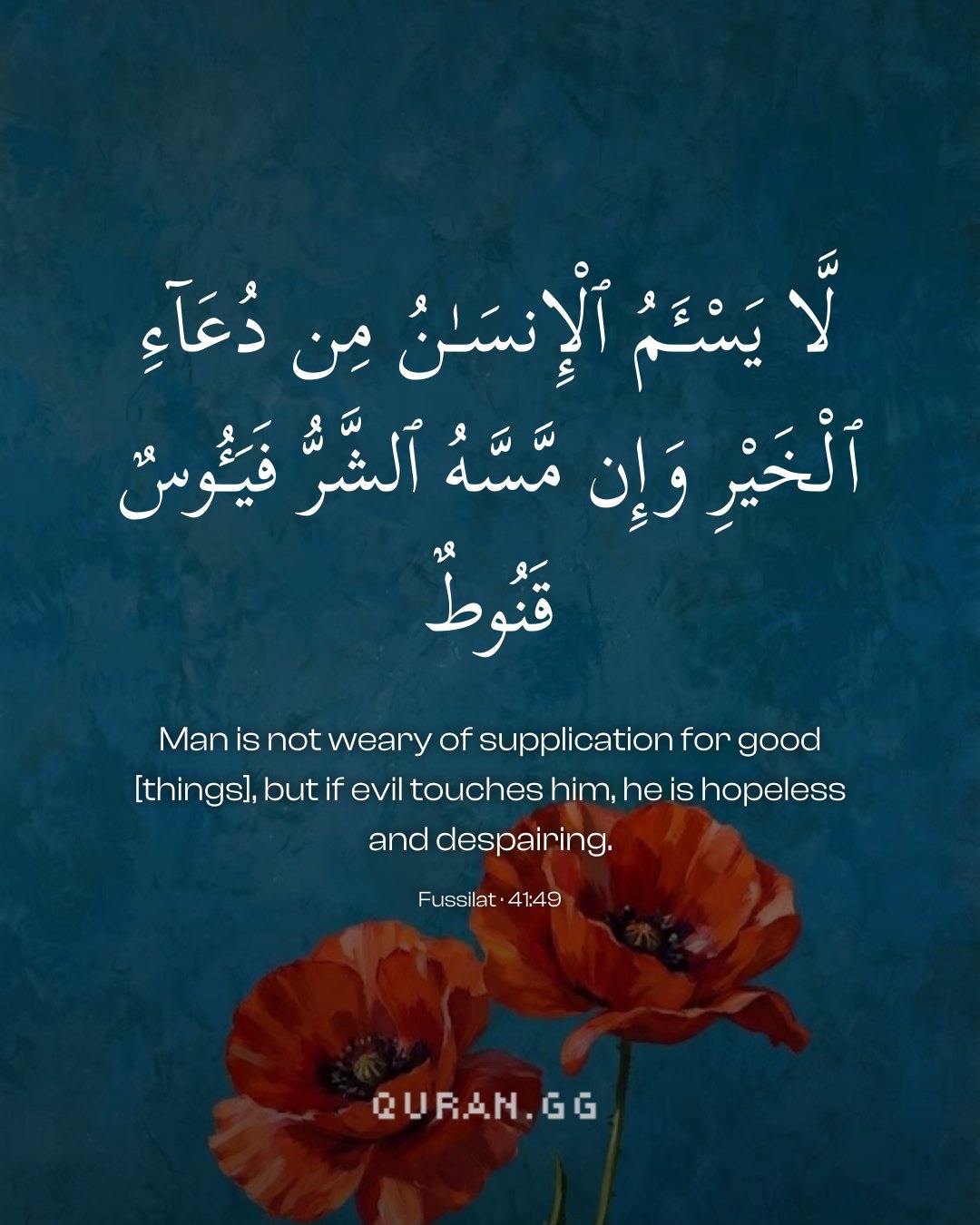
Allah tells us that man never gets bored of asking his Lord for good things, such as wealth, physical health, etc., but if evil touches him -- i.e., trials and difficulties or poverty --
فَيَئُوسٌ قَنُوطٌ
(then he gives up all hope and is lost in despair.), i.e., he thinks that he will never experience anything good again.
وَلَئِنْ أَذَقْنَـهُ رَحْمَةً مِّنَّا مِن بَعْدِ ضَرَّآءَ مَسَّتْهُ لَيَقُولَنَّ هَـذَا لِى
(And truly, if We give him a taste of mercy from Us, after some adversity has touched him, he is sure to say: "This is due to my (merit)...") means, if something good happens to him or some provision comes to him after a period of difficulty, he says, `this is because of me, because I deserve this from my Lord.'
وَمَآ أَظُنُّ السَّاعَةَ قَائِمَةً
(I think not that the Hour will be established.) means, he does not believe that the Hour will come. So when he is given some blessing, he becomes careless, arrogant and ungrateful, as Allah says:
كَلاَّ إِنَّ الإِنسَـنَ لَيَطْغَى - أَن رَّءَاهُ اسْتَغْنَى
(Nay! Verily, man does transgress. Because he considers himself self-sufficient.) (96:6)
وَلَئِن رُّجِّعْتُ إِلَى رَبِّى إِنَّ لِى عِندَهُ لَلْحُسْنَى
(But if I am brought back to my Lord, surely there will be for me the best with Him.) means, `if there is a Hereafter after all, then my Lord will be generous and kind to me just as He was in this world.' So he expects Allah to do him favors in spite of his bad deeds and lack of certain faith. Allah says:
فَلَنُنَبِّئَنَّ الَّذِينَ كَفَرُواْ بِمَا عَمِلُواْ وَلَنُذِيقَنَّهُمْ مِّنْ عَذَابٍ غَلِيظٍ
(Then, We verily will show to the disbelievers what they have done, and We shall make them taste a severe torment.) Thus Allah threatens punishment and vengeance to those whose conduct and belief is like that.
وَإِذَآ أَنْعَمْنَا عَلَى الإنْسَـنِ أَعْرَضَ وَنَأَى بِجَانِبِهِ
(And when We show favor to man, he turns away and becomes arrogant;) means, he turns away from doing acts of obedience and is too proud to obey the commands of Allah. This is like the Ayah:
فَتَوَلَّى بِرُكْنِهِ
(But Fir`awn turned away along with his hosts) (51:39).
وَإِذَا مَسَّهُ الشَّرُّ
(but when evil touches him,) means, difficulties,
فَذُو دُعَآءٍ عَرِيضٍ
(then he has recourse to long supplications.) means, he asks at length for one thing. Long supplications are those which are long on words and short on meaning. The opposite is concise speech which is brief but full of meaning. And Allah says:
وَإِذَا مَسَّ الإِنسَـنَ الضُّرُّ دَعَانَا لِجَنبِهِ أَوْ قَاعِدًا أَوْ قَآئِمًا فَلَمَّا كَشَفْنَا عَنْهُ ضُرَّهُ مَرَّ كَأَن لَّمْ يَدْعُنَآ إِلَى ضُرٍّ مَّسَّهُ
(And when harm touches man, he invokes Us, lying on his side, or sitting or standing. But when We have removed his harm from him, he passes on as if he had never invoked Us for a harm that touched him!) (10:12)