Tafsir Ibn Kathir (abridged)
The Parable of the Word of Islam and the Word of Kufr
`Ali bin Abi Talhah reported that `Abdullah bin `Abbas commented that Allah's statement,
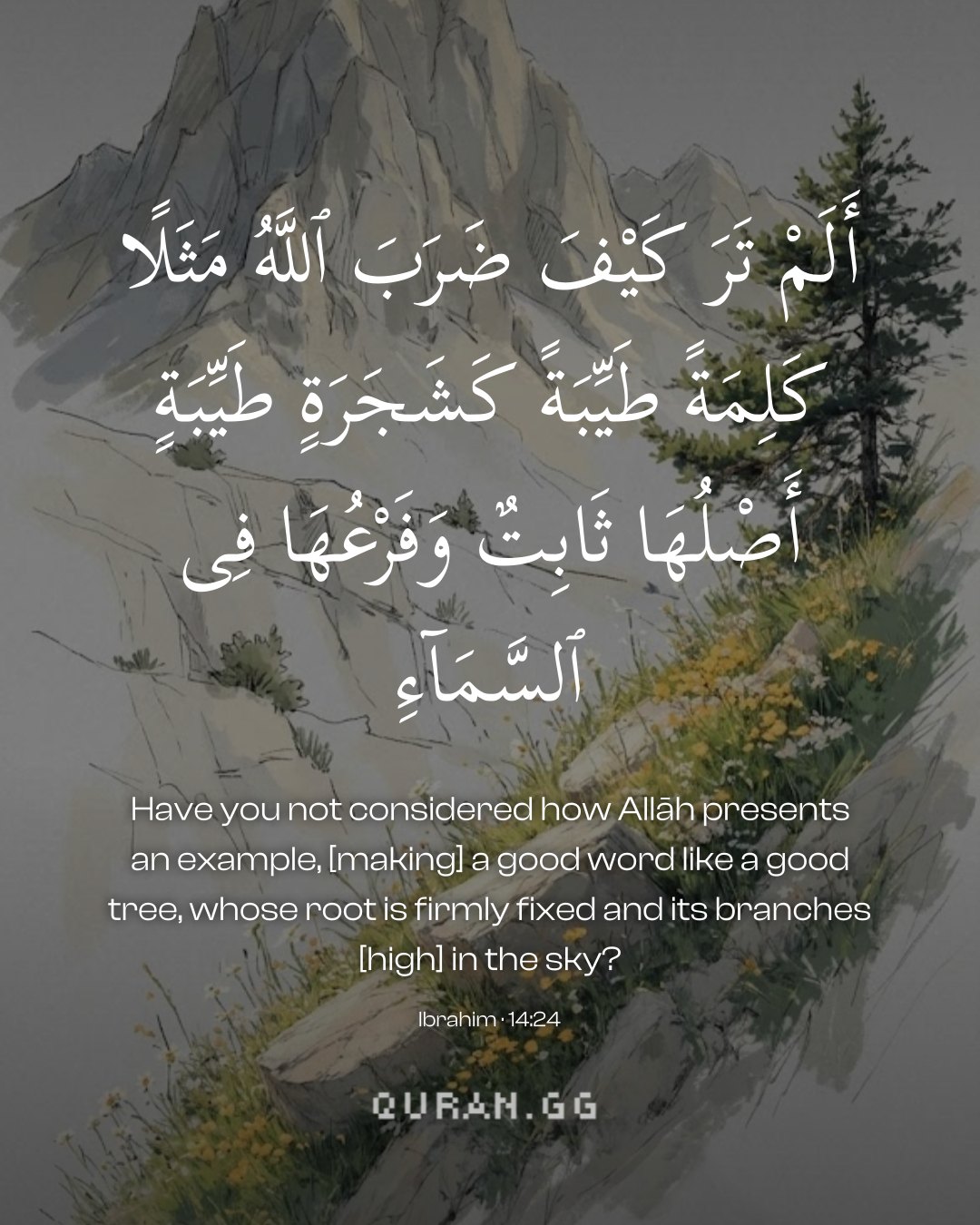
مَثَلاً كَلِمَةً طَيِّبَةً
(a parable: a goodly word), refers to testifying to La ilaha illallah, (none has the right to be worshipped but Allah) while,
كَشَجَرةٍ طَيِّبَةٍ
(as a goodly tree), refers to the believer, and that,
أَصْلُهَا ثَابِتٌ
(whose root is firmly fixed), indicates that La ilaha illallah, (none has the right to be worshipped but Allah) is firm in the believers' heart,
وَفَرْعُهَا فِى السَّمَآءِ
(and its branches (reach) to the sky.) with which the believer's works are ascended to heaven. Similar is said by Ad-Dahhak, Sa'id bin Jubayr, `Ikrimah, Mujahid and several others. They stated that this parable describes the believer's deeds, good statements and good actions. The believer is just like the beneficial date tree, always having good actions ascending at all times, by day and by night. Al-Bukhari recorded that `Abdullah bin `Umar said, "We were with the Messenger of Allah ﷺ when he asked,
«أَخْبِرُونِي عَنْ شَجَرَةٍ تُشْبِهُ أَوْ كَالرَّجُلِ الْمُسْلِمِ لَا يَتَحَاتُّ وَرَقُهَا صَيْفًا وَلَا شِتَاءً، وَتُؤْتِي أُكُلَهَا كُلَّ حِينٍ بِإِذْنِ رَبِّهَا»
(Tell me about a tree that resembles the Muslim, the leaves of which do not fall in summer or winter and gives its fruit at all times by the leave of its Lord.)" Ibn `Umar said, "I thought of the date palm tree, but felt shy to answer when I saw that Abu Bakr and `Umar did not talk. When they did not give an answer, the Messenger of Allah ﷺ said,
«هِيَ النَّخْلَة»
(It is the date palm tree.) When we departed, I said to `Umar, `My father, by Allah! I thought that it was the date tree.' He said, `Why did you not speak then' I said, `I saw you were silent and I felt shy to say anything.' `Umar said, `Had you said it, it would have been more precious to me than such things (i.e., would have been very precious to me)."' `Abdullah bin `Abbas said that,
كَشَجَرةٍ طَيِّبَةٍ
(as a goodly tree), is a tree in Paradise. Allah said next,
تُؤْتِى أُكُلَهَا كُلَّ حِينٍ
(Giving its fruit at all times,) It is said that it means by day and by night. And they say that describes the believer as a tree that always has fruits during summer and winter, by night and by day. This is the parable of the believer whose good works ascend to heaven by day and by night and at all times,
بِإِذْنِ رَبِّهَا
(by the leave of its Lord, ) thus earning perfection and becoming beneficial, plentiful, pure and blessed,
وَيَضْرِبُ اللَّهُ الأَمْثَالَ لِلنَّاسِ لَعَلَّهُمْ يَتَذَكَّرُونَ
(and Allah sets forth parables for mankind in order that they may remember.) Allah said next,
وَمَثلُ كَلِمَةٍ خَبِيثَةٍ كَشَجَرَةٍ خَبِيثَةٍ
(And the parable of an evil word is that of an evil tree) describing the disbelief of the disbeliever, for it has no basis or stability. It is similar to the colocynth tree (a very bitter, unscented plant) which is also called, `Ash-Shiryan'. Shu`bah narrated that Mu`awiyah bin Abi Qurrah narrated that Anas bin Malik said that it is the colocynth tree. Allah said,
اجْتُثَّتْ
(uprooted), meaning, was cutoff from the root,
مِن فَوْقِ الاٌّرْضِ مَا لَهَا مِن قَرَارٍ
(from the surface of earth, having no stability.) therefore, existing without basis or stabililty, just like Kufr (disbelief), for it does not have a basis or roots. Surely, the works of the disbelievers will never ascend nor will any of them be accepted.