The Situation of the True Believer and the Sick-Hearted when the Command for Jihad was revealed
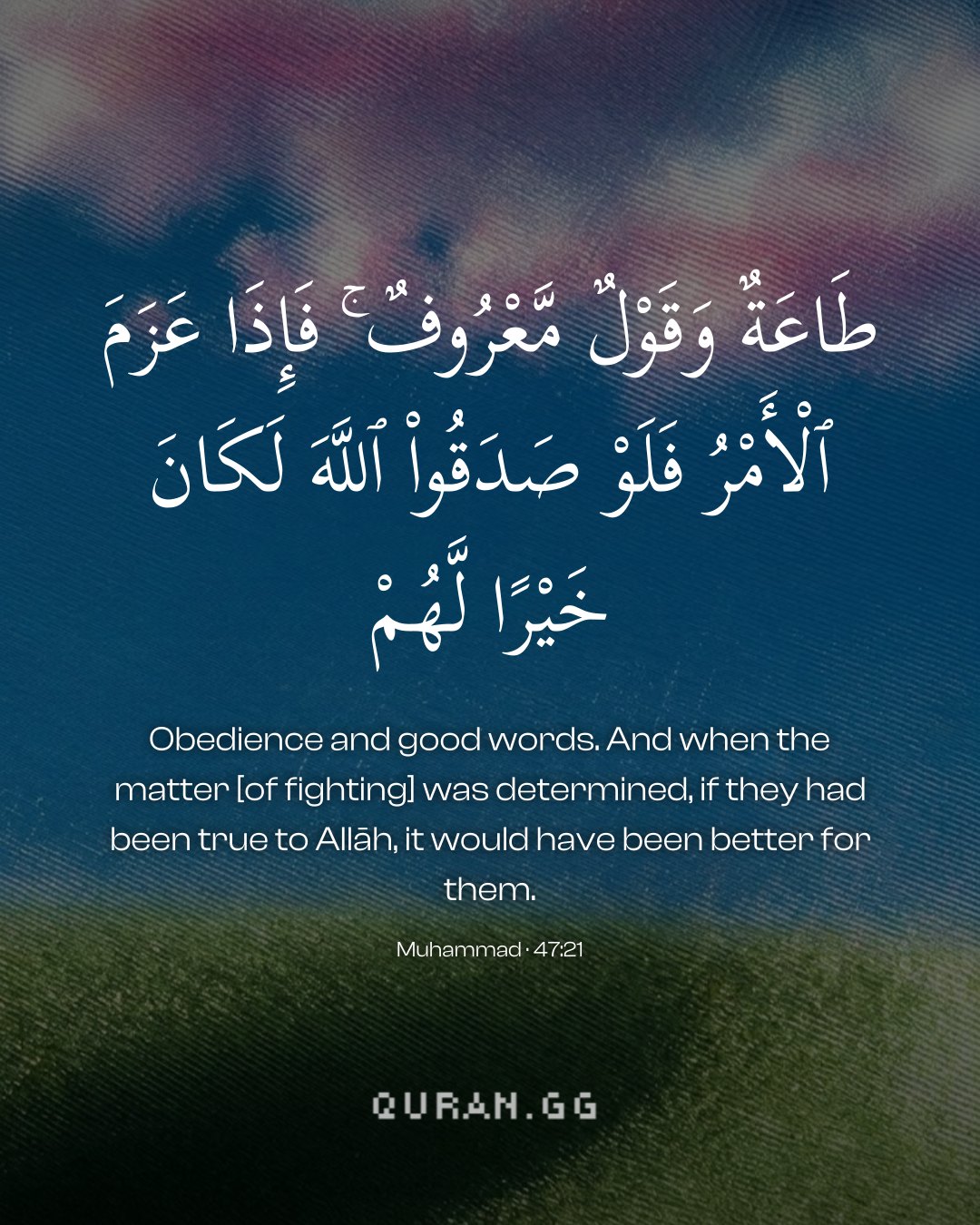
Allah mentions that the believers were hoping that Jihad would be legislated. But when Allah ordained it, many of the people turned back, as Allah says,
(Have you not seen those who were told: "Restrain your hands (from fighting), establish the Salah, and give Zakah." But then when fighting was ordained for them, you find a party of them fearing the people as they fear Allah or more. They said: "Our Lord! Why have You decreed fighting upon us If only You have postponed us for a short period." Say: "The enjoyment of this world is little. The Hereafter is far better for him who had Taqwa of (Allah), and you will not be dealt with unjustly, even as much as a thin thread (inside a date's pit).")(4:77) Similarly, Allah says here,
سُورَةٌ مُّحْكَمَةٌ (an operative surah): The word مُّحْكَمَةٌ muhkamah lexically means "firm". In this lexical sense, every surah is muhkam, but here it is used in its technical sense. In the technical parlance of the sacred law, the term muhkam is used as an antonym of mansukh, ("abrogated" ). Here the word Surah has been qualified by the adjective muhkamah so that the eagerness of the believers for a new Surah is understandable only when it embodies an operative divine commandment that is not abrogated. Qatadah, says that all Surahs which contain the injunctions of Jihad and Qital are operative and not abrogated. As the main objective of this Surah is to enjoin fighting and to persuade people to carry out the injunction, the adjectival phrase is: Surah muhkamah - indicating the injunction of Jihad. (Qurtubi)
أَوْلَىٰ لَهُمْ (So, destruction is very close to them - 47:20] The Arabic word used in the text, according to Asma'i, means that the causes of destruction have approached or drawn near to them (Qurtubi).
Tazkirul Quran
Maulana Wahiduddin KhanOn ayahs 19–22
One who refuses to be on the alert on receipt of advance information about an earthquake, is in fact courting disaster, because every ensuing moment is bringing the earthquake closer to him. Similarly, man does not take warning from the portents of Doomsday. But when Doomsday breaks upon him, he will resort to pious avowals. But such avowals at that stage will be of no use, because only that testament to the truth has value which is made before the curtain rises. After the rising of the curtain, it has no value. Begging God’s pardon is, in fact, an expression of the feeling of one’s humbleness. Firm belief in the horror of Doomsday, in God’s power and the realisation of His being aware of everything, creates a psychological upheaval in man. This is evinced at every moment in the shape of sublime utterances. These take the shape of remembrance of God, prayer and the seeking of God’s pardon.
Uthmani text of the Madinah mushaf (King Fahd Complex). Translation: Saheeh International. Tafsir via Quran.com.