Showing the Triviality of the Worldly Life and encouraging Spending
Expressing the insignificance and worthlessness of the worldly life, Allah says,
إِنَّمَا الْحَيَوةُ الدُّنْيَا لَعِبٌ وَلَهْوٌ
(This worldly life is only amusement and diversion.) which means that such is its outcome, except for that which is done for the sake of Allah. Because of this, Allah says,
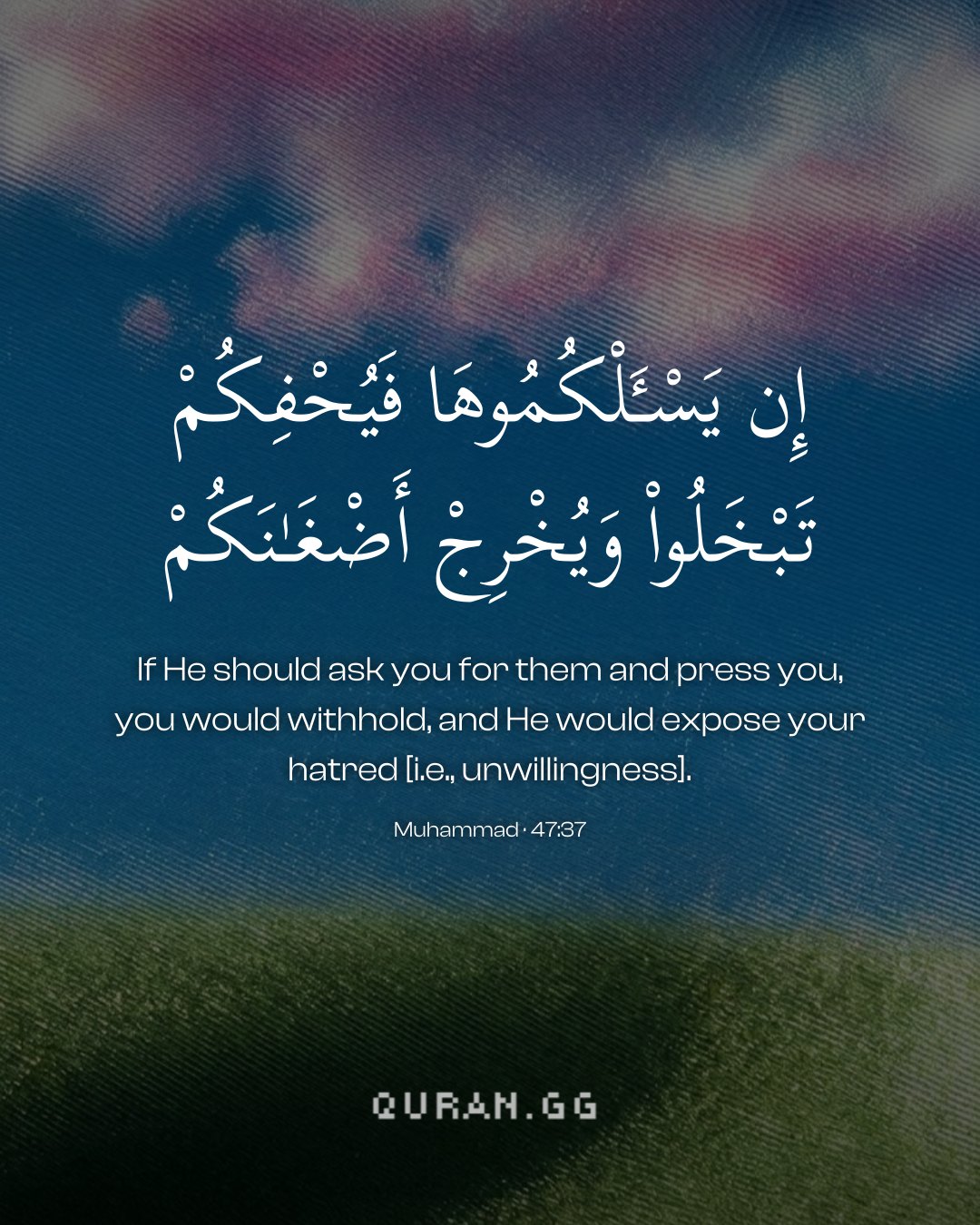
(And if you believe and have Taqwa of Allah, He will grant you your rewards, and will not ask from you (to sacrifice all of) your possessions.) meaning, He is in no need of you, and asks you for nothing. He only ordained giving charity from your wealth so that you would help your needy brothers. The benefit of that would then come back to you, as well as the rewards. Allah then says,
إِنَّمَا الْحَيَاةُ الدُّنْيَا (The worldly life is but play and pastime - 47:36.) As Muslims have been enjoined to fight in the cause of Allah, they will, for this purpose, have to make sacrifices of life and money. But the love of this world is the only thing that can prevent man from fighting. In this verse we are told that neither of these mundane benefits is permanent. After all, they all will perish and come to an end. Even if we succeed in saving them for now, they will be lost another time. The bounties of the next world are permanent and eternal: the believers need to develop love for them - not for the perishable things of this ephemeral world.
It is mentioned in a tradition that, during the period of the Prophet Muhammad, certain Muslims opined that if they professed, ‘la ilaha illallah’ (there is nobody worth worshipping except God), they would come to no harm by any sin. In that connection, this verse 33 was revealed. In this light the verse means that a man should combine obedience with Faith. He should carry out not only the harmless commandments but also those commandments for which he has to crush his self and jeopardize his interests. If he does not do so, his earlier deeds will be of no avail. The position of weak Muslims is that they will support the Truth on the condition that they should not have to incur the displeasure of the great men of their day. When they see that supporting the Truth is becoming a cause of displeasure to them, they tilt towards them even if these great men are rejecters of the Truth or stubbornly resistant to it. Those who reject the Truth or set themselves up as its opponents can never receive the grace of God. Then how can those who side with such rejecters of Truth meet with any other fate? In Islam there is war as well as peace. But that war is not Islamic which is fought under provocation. In Islam only defensive war is permitted. Such a war should not be the consequence of an emotional reaction, but one which results from a proper decision, and is defensive by nature.
Uthmani text of the Madinah mushaf (King Fahd Complex). Translation: Saheeh International. Tafsir via Quran.com.