The Entire Qur'an is the Remembrance of Allah and mentioning thePunishment of Those Who turn away from It
Allah, the Exalted, is saying to Prophet Muhammad ﷺ, `We have told you (O Muhammad) the story of Musa and what happened with him, Fir`awn and his armies, just as it actually happened. Likewise, We relate to you the information of the past just as it happened, without any increase or decrease. We also gave you a remembrance from Us, the Mighty Qur'an, no falsehood comes to it from before it or behind it.' It is a revelation from One Most Wise, Most Praiseworthy. No Prophet was given any Book like it or more complete than it, since the time of the previous Prophets who were sent, until their being sealed off with the coming of Muhammad ﷺ. No Prophet was given any Book containing as much information than the Qur'an about what has past and what would be. The judgement concerning the distinction between mankind is taken from it. Therefore, Allah says about it,
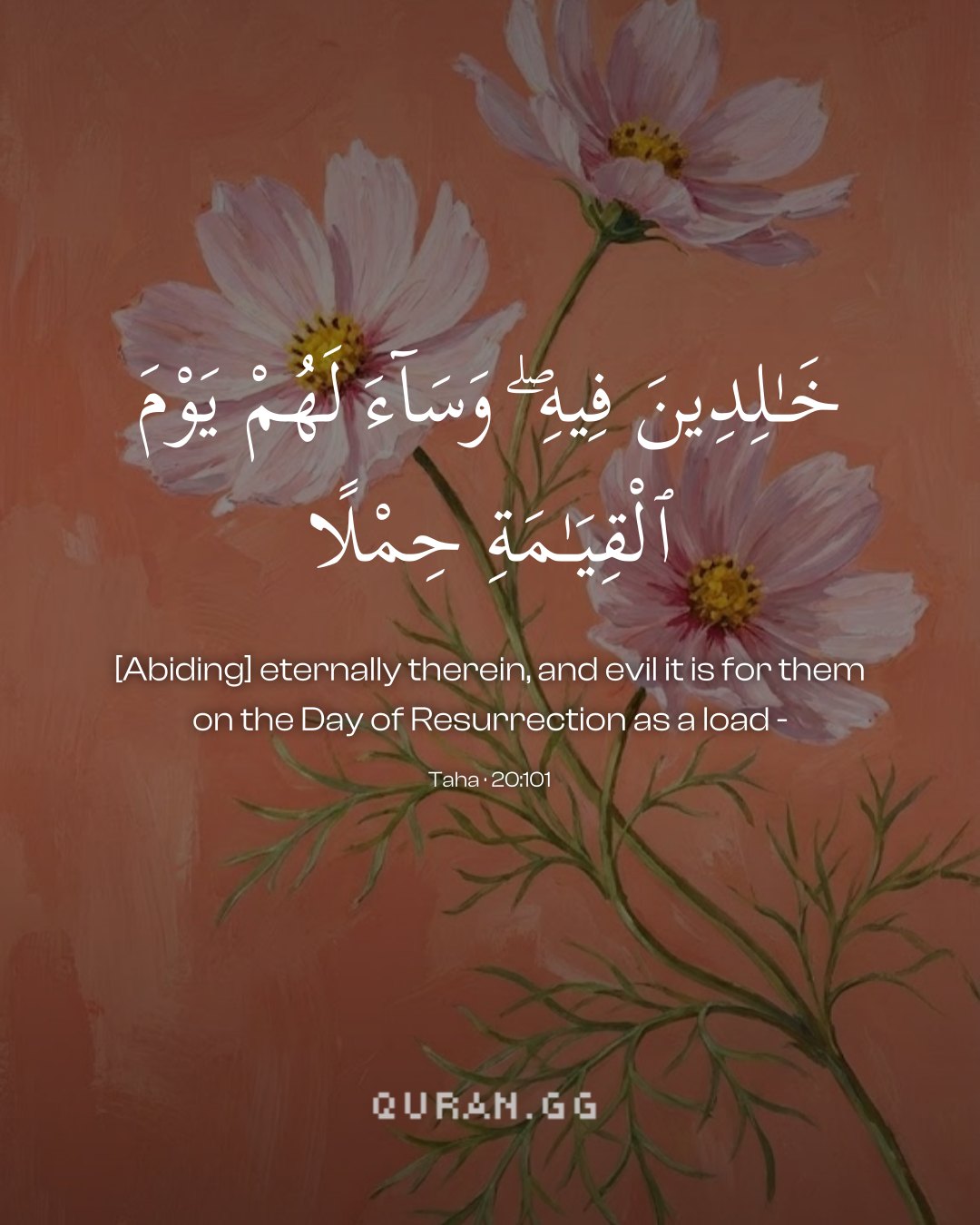
مَّنْ أَعْرَضَ عَنْهُ فَإِنَّهُ يَحْمِلُ يَوْمَ الْقِيَامَةِ وِزْرًا (Whoever turns away from it shall certainly bear a heavy burden on the Doomsday - 20:100) Turning aside from the Qur'an can take different forms: not paying proper attention and respect when it is being recited; showing scant desire to learn to read it or to comprehend its meaning, or reading it incorrectly without regard to correct pronunciation etc.; reading it without full concentration; reading it not to win God's goodwill but to attain worldly rewards such as wealth and fame. Likewise not striving to comprehend the laws laid down by the Qur'an or, having understood them, not complying with them or acting in their defiance are extreme forms of disregard for the Qur'an. Any neglect of the rights and claims of the Qur'an is a great sin and the guilty person will bear it on his head on the Day of Judgment in the shape of a heavy load. It has been related in several traditions that the evil deeds and the sins which a person has committed in his life time will be placed on his head in the shape of a heavy burden on the Day of Resurrection.
Tazkirul Quran
Maulana Wahiduddin KhanOn ayahs 98–103
When Moses came to know that Samiri was the leader behind this episode, he made enquiries of him. Samiri cunningly made excuses and said that whatever he had done was done under the influence of divine inspiration (kashf) and that some earth taken from the footprint of the Prophet Moses himself had been included in the idol as being auspicious. Samiri’s attempt to deceive Moses and at the same time win cheap popularity in his community cast a more serious light upon his crime. For his sins, God punished him (according to the Bible) with the disease of leucoderma, with additional punishment to be meted out to him in the life hereafter. His body became so obnoxious that people used to shun him. He became the most hated person in his community. In order to cleanse the Israelites’ minds of the false impression they had formed of the greatness of the calf deity, Moses burnt it before their eyes and floated the ashes in the sea.
Uthmani text of the Madinah mushaf (King Fahd Complex). Translation: Saheeh International. Tafsir via Quran.com.