Tafsir Ibn Kathir (abridged)
How As-Samiri made the Calf
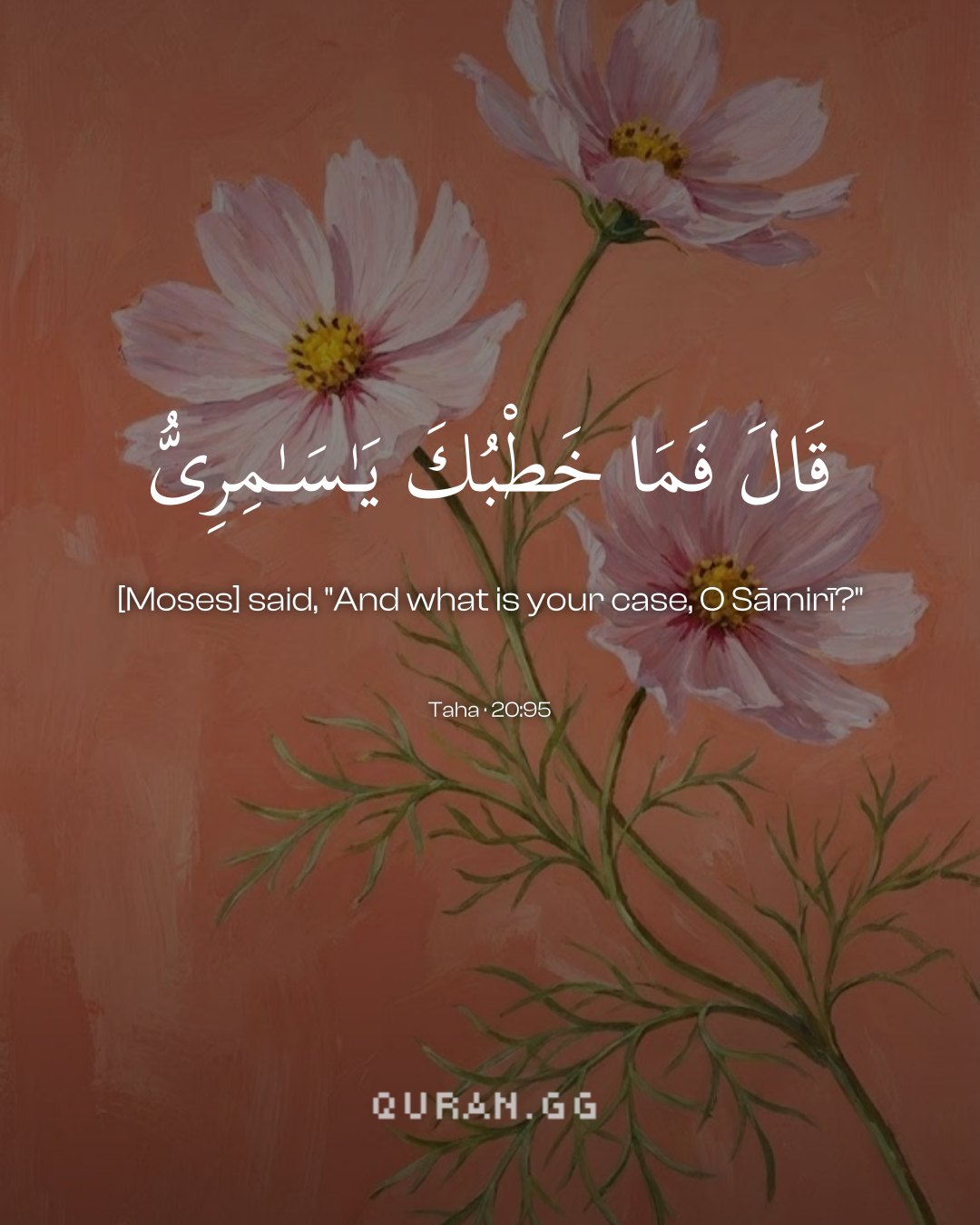
Musa said to As-Samiri, "What caused you to do what you did What presented such an idea to you causing you to do this" Muhammad bin Ishaq reported from Ibn `Abbas that he said, "As-Samiri was a man from the people of Bajarma, a people who worshipped cows. He still had the love of cow worshipping in his soul. However, he acted as though he had accepted Islam with the Children of Israel. His name was Musa bin Zafar." Qatadah said, "He was from the village of Samarra."
قَالَ بَصُرْتُ بِمَا لَمْ يَبْصُرُواْ بِهِ
((Samiri) said: "I saw what they saw not.") This means, "I saw Jibril when he came to destroy Fir`awn."
فَقَبَضْتُ قَبْضَةً مِّنْ أَثَرِ الرَّسُولِ
(so I took a handful (Qabdah) from the print of the messenger) This means from the hoof print of his (Jibril's) horse. This is what is well-known with many of the scholars of Tafsir, rather most of them. Mujahid said,
فَقَبَضْتُ قَبْضَةً مِّنْ أَثَرِ الرَّسُولِ
(so I took a handful (Qabdah) from the print of the messenger) "From under the hoof of Jibril's horse." He also said, "The word Qabdah means a palmful, and it is also that which is grasped by the tips of the fingers." Mujahid said, "As-Samiri threw what was in his hand onto the jewelry of the Children of Israel and it became molded into the body of a calf, which made a light moaning sound. The wind that blew into it was the cause of its sound." Thus, he said,
فَنَبَذْتُهَا
(and I threw it.) This means, "I threw it along with those who were throwing (jewelry)."
وَكَذلِكَ سَوَّلَتْ لِى نَفْسِى
(Thus my inner self suggested to me.) This means that his soul considered it something good and it was pleasing to his self.
The Punishment of As-Samiri and the burning of the Calf Thereupon,
قَالَ فَاذْهَبْ فَإِنَّ لَكَ فِى الْحَيَوةِ أَن تَقُولَ لاَ مِسَاسَ
((Musa) said: "Then go away! And verily, your (punishment) in this life will be that you will say: `Touch me not."') This means, "Just as you took and touched what was not your right to take and touch of the messenger's foot print, such is your punishment in this life, that you will say, `Do not touch (me)."' This means, "You will not touch the people and they will not touch you."
وَإِنَّ لَكَ مَوْعِداً
(and verily, you have a promise) This means on the Day of Resurrection.
لَّن تُخْلَفَهُ
(that will not fail.) you will have no way to escape it. Qatadah said,
أَن تَقُولَ لاَ مِسَاسَ
(that you will say: `Touch me not.') "This is referring to a punishment for them and their remnants (i.e. those who have their disease) today still say `Do not touch."' Concerning Allah's statement,
وَإِنَّ لَكَ مَوْعِداً لَّن تُخْلَفَهُ
(and verily, you have a promise that will not fail.) Al-Hasan, Qatadah and Abu Nahik said, "You will not be absent from it."
وَانظُرْ إِلَى إِلَـهِكَ
(And look at your god) that which you worshipped,
الَّذِى ظَلْتَ عَلَيْهِ عَاكِفاً
(to which you have been devoted.) that which you established worship of, which was the calf.
إِنَّمَآ إِلَـهُكُمُ اللَّهُ الَّذِى لا إِلَـهَ إِلاَّ هُوَ وَسِعَ كُلَّ شَىْءٍ عِلْماً
(Your God is only Allah, there is no God but Him. He has full knowledge of all things.) Musa was saying to them, "This is not your god. Your God is only Allah, the One Whom there is no true God except Him. Worship is not befitting to anyone except Him. For everything is in need of Him and everything is His servant. Concerning the statement,
وَسِعَ كُلَّ شَىْءٍ عِلْماً
(He has full knowledge of all things.) The word `Ilm (knowledge) is in the accusative case for distinction. It means that He is the All-Knower of everything.
أَحَاطَ بِكُلِّ شَىْءٍ عِلْمَا
((Allah) surrounds all things in (His) knowledge. ) 65:12 And He says,
وَأَحْصَى كُلَّ شَىْءٍ عَدَداً
(And (He) keeps count of all things.) 72:28 Therefore,
لاَ يَعْزُبُ عَنْهُ مِثْقَالُ ذَرَّةٍ
(Not even the weight of a speck of dust escapes His knowledge.) 34:3 He also says,
وَمَا تَسْقُطُ مِن وَرَقَةٍ إِلاَّحَبَّةٍ فِى ظُلُمَـتِ الاٌّرْضِ وَلاَ رَطْبٍ وَلاَ يَابِسٍ إِلاَّ فِى كِتَـبٍ مُّبِينٍ
(Not a leaf falls, but He knows it. There is not a grain in the darkness of the earth nor anything fresh or dry, but is written in a Clear Record.) 6:59 And He says,
وَمَا مِن دَآبَّةٍ فِي الاٌّرْضِ إِلاَّ عَلَى اللَّهِ رِزْقُهَا وَيَعْلَمُ مُسْتَقَرَّهَا وَمُسْتَوْدَعَهَا كُلٌّ فِى كِتَابٍ مُّبِينٍ
(And no moving creature is there on earth but its provision is due from Allah. And He knows its dwelling place and its deposit. All is in a Clear Book.) 11:6 The Ayat that mention this are numerous.