Tafsir Ibn Kathir (abridged)
How the Idolators asked for the Torment to be hastened on
Allah tells us of the ignorance of the idolators and how they asked for the punishment of Allah to be hastened so that it would befall them quickly. This is like the Ayah,
وَإِذْ قَالُواْ اللَّهُمَّ إِن كَانَ هَـذَا هُوَ الْحَقَّ مِنْ عِندِكَ فَأَمْطِرْ عَلَيْنَا حِجَارَةً مِّنَ السَّمَآءِ أَوِ ائْتِنَا بِعَذَابٍ أَلِيمٍ
(And when they said: "O Allah! If this is indeed the truth from You, then rain down stones on us from the sky or bring on us a painful torment.") (8:32). And Allah says here:
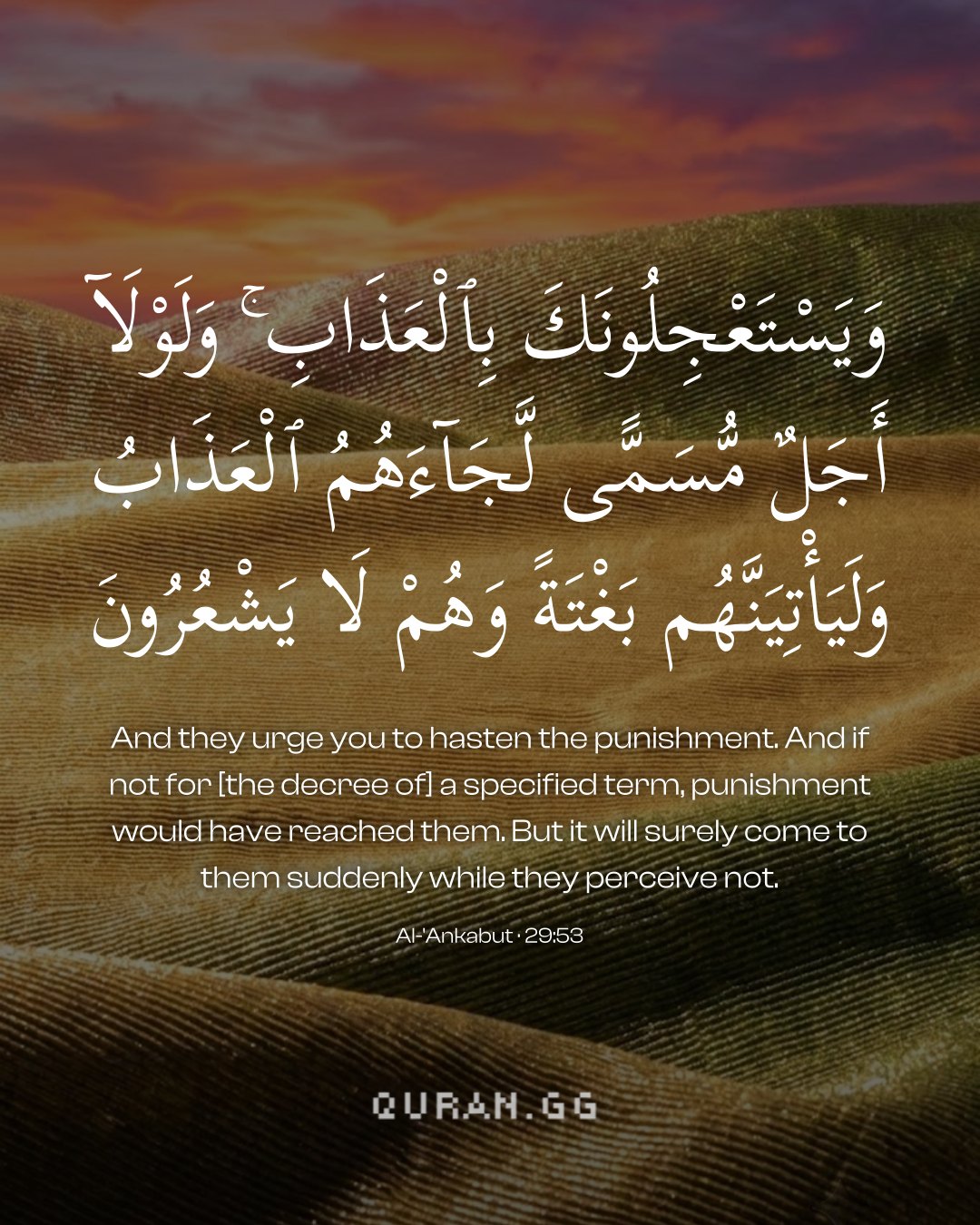
وَيَسْتَعْجِلُونَكَ بِالْعَذَابِ وَلَوْلاَ أَجَلٌ مُّسَمًّى لَّجَآءَهُمُ الْعَذَابُ
(And they ask you to hasten on the torment, and had it not been for a term appointed, the torment would certainly have come to them.) Were it not for the fact that Allah has decreed that the punishment should be delayed until the Day of Resurrection, the torment would have come upon them quickly as they demanded. Then Allah says:
وَيَسْتَعْجِلُونَكَ بِالْعَذَابِ وَلَوْلاَ أَجَلٌ مُّسَمًّى لَّجَآءَهُمُ الْعَذَابُ وَلَيَأْتِيَنَّهُمْ بَغْتَةً وَهُمْ لاَ يَشْعُرُونَ - يَسْتَعْجِلُونَكَ بِالْعَذَابِ وَإِنَّ جَهَنَّمَ لَمُحِيطَةٌ بِالْكَـفِرِينَ
(And surely, it will come upon them suddenly while they perceive not! They ask you to hasten on the torment. And verily, Hell, of a surety, will encompass the disbelievers.) means, `they ask you to hasten on the punishment, but it will undoubtedly befall them.'
يَوْمَ يَغْشَـهُمُ الْعَذَابُ مِن فَوْقِهِمْ وَمِن تَحْتِ أَرْجُلِهِمْ
(On the Day when the torment (Hellfire) shall cover them from above them and from beneath their feet,) This is like the Ayah,
لَهُم مِّن جَهَنَّمَ مِهَادٌ وَمِن فَوْقِهِمْ غَوَاشٍ
(Theirs will be a bed of Hell, and over them coverings (of Hell-fire)) (7:41).
لَهُمْ مِّن فَوْقِهِمْ ظُلَلٌ مِّنَ النَّارِ وَمِن تَحْتِهِمْ ظُلَلٌ
(They shall have coverings of Fire, above them and coverings (of Fire) beneath them) (39:16).
لَوْ يَعْلَمُ الَّذِينَ كَفَرُواْ حِينَ لاَ يَكُفُّونَ عَن وُجُوهِهِمُ النَّارَ وَلاَ عَن ظُهُورِهِمْ
(If only those who disbelieved knew (the time) when they will not be able to ward off the Fire from their faces, nor from their backs) (21:39). The Fire will cover them from all sides, which is more effective as a physical punishment.
وَيِقُولُ ذُوقُواْ مَا كُنْتُمْ تَعْمَلُونَ
(and it will be said: "Taste what you used to do.") This is a threat and a rebuke, which is a form of psychological punishment, as in the Ayah,
يَوْمَ يُسْحَبُونَ فِى النَّارِ عَلَى وُجُوهِهِمْ ذُوقُواْ مَسَّ سَقَرَ - إِنَّا كُلَّ شَىْءٍ خَلَقْنَـهُ بِقَدَرٍ
(The Day they will be dragged on their faces into the Fire (it will be said to them): "Taste you the touch of Hell!" Verily, We have created all things with a measurement.) (54:48-49)
يَوْمَ يُدَعُّونَ إِلَى نَارِ جَهَنَّمَ دَعًّا - هَـذِهِ النَّارُ الَّتِى كُنتُم بِهَا تُكَذِّبُونَ - أَفَسِحْرٌ هَـذَا أَمْ أَنتُمْ لاَ تُبْصِرُونَ - اصْلَوْهَا فَاصْبِرُواْ أَوْ لاَ تَصْبِرُواْ سَوَآءٌ عَلَيْكُمْ إِنَّمَا تُجْزَوْنَ مَا كُنتُمْ تَعْمَلُونَ
(The Day when they will be pushed down by force to the fire of Hell, with a horrible, forceful pushing. This is the Fire which you used to deny. Is this magic or do you not see Enter you therein (taste you therein its heat) and whether you are patient of it or impatient of it, it is all the same. You are only being requited for what you used to do.) (52:13-16)