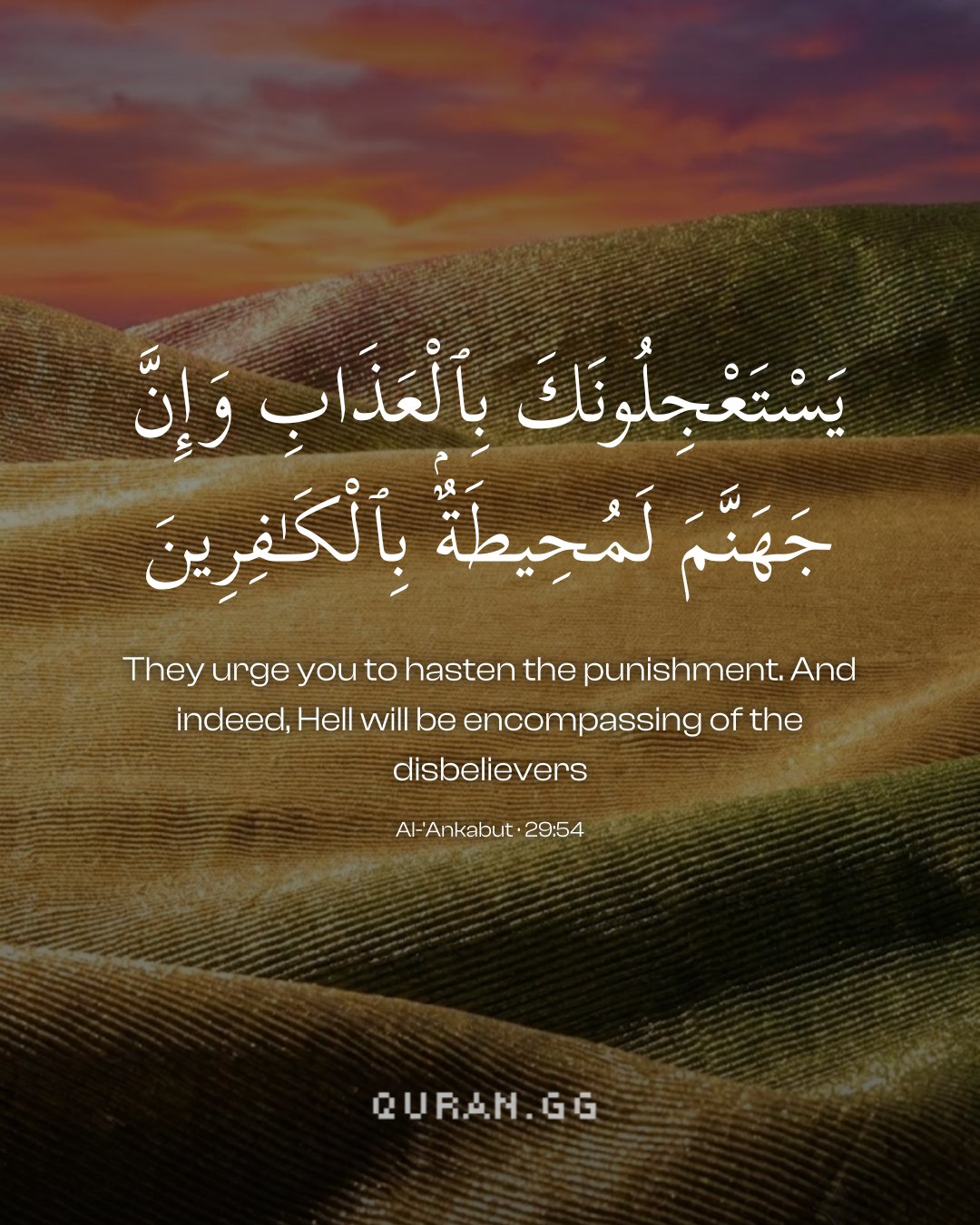
How the Idolators asked for the Torment to be hastened on
Allah tells us of the ignorance of the idolators and how they asked for the punishment of Allah to be hastened so that it would befall them quickly. This is like the Ayah,
(And when they said: "O Allah! If this is indeed the truth from You, then rain down stones on us from the sky or bring on us a painful torment.") (8:32). And Allah says here:
(And they ask you to hasten on the torment, and had it not been for a term appointed, the torment would certainly have come to them.) Were it not for the fact that Allah has decreed that the punishment should be delayed until the Day of Resurrection, the torment would have come upon them quickly as they demanded. Then Allah says:
The status of the narrations of the People of the Book quoted by the commentators in their commentaries is also the same. The object of their reproduction in the commentaries is meant to highlight their historical position. They cannot be used for determining what is permitted (halal) and what is not permitted حَرَام (haram).
مَا كُنتَ تَتْلُو مِن قَبْلِهِ مِن كِتَابٍ وَلَا تَخُطُّهُ بِيَمِينِكَ إِذًا لَّارْتَابَ الْمُبْطِلُونَ (And you have never been reciting any book before this, nor have you been writing it with your right hand, had it been so, the people of falsehood would have raised doubts. - 29:48). That is Before the revelation of the Qur'an you could neither read nor write, rather you were unlettered (اُمِّی). If it was not so, and you were literate, then there could have been a possibility of doubt for the infidels to put the blame that you were repeating what you had read in, the earlier books, Torah and Injil, and it was not a new revelation sent down on you by way of prophethood.'
People used to raise the objection that the Prophet Muhammad had not been given signs of God such as had been given to others, such as Moses, God’s answer to them was that signs or miracles were matters pertaining to Him and not to the prophets. The real support of the Prophet’s call of Truth are the sound arguments. Owing to certain considerations, God sometimes does give His signs or miracles to a prophet, but sometimes He does not. Faith is a conscious experience. Faith finds its place in a man’s heart once he is convinced by arguments in its favour. One who accepts something after testing it in the light of arguments is a protagonist of Truth, and one who indulges in irrelevant discussions is a worshipper of falsehood.
Uthmani text of the Madinah mushaf (King Fahd Complex). Translation: Saheeh International. Tafsir via Quran.com.